From the Big Ben to the Big Apple

10 Differences Between American And British English


Published on December 16, 2023


Image: Nick Fewings

Picture in your mind a conversation between a New Yorker, someone raised in the American Midwest, and someone from the Deep South. You can probably imagine a rich tapestry of accents, regional variations, and idiomatic expressions. All within the borders of the United States. Now, the Atlantic Ocean is vast. Over time, American English and its counterpart from across the pond have grown apart, sometimes evolving in completely different ways. From pronunciation and vocabulary to spelling, here are 10 differences between American and British English.

1

Colorful flavor

Image: Diana Polekhina

Most of the words that end in -our in British English are spelled -or in American English. You'll find examples in words like flavor, armor, and color. These are words of Latin origin that have found their way into English either directly or through some intermediary, particularly French.

For some time, both variations were widely accepted. However, when the time came to make a final decision, Americans decided to stick closer to the original Latin spelling of the words, while the British favored a more French-influenced spelling, keeping the extra u.

2

Toward a brighter future

Image: Jon Tyson

In Old English, the suffix -weard was used to specify direction, and it's the origin of words such as toward, forward, backward, etc. However, in a quirk of language that has stumped linguists for years, for every -ward word there is a -wards counterpart with the same meaning.

There's no consensus regarding where the extra s came from, but -wards has been the preferred British spelling since at least the 20th century, while most American writers agree that it's unetymological.

3

Zed v. Zee

Image: Diomari Madulara

British speakers call zed what Americans call zee. It seems that Americans chose the latter pronunciation because of its similarity to bee, cee, dee, etc. But, when it comes to the letter z, the differences run deeper than just naming conventions.

Most verbs that end in -ize in American English are spelled -ise in British English. In a similar fashion to the -or/-our words, both spellings were once accepted until American 20th-century dictionaries standardized the -ize spelling. Apparently, the British then decided to keep the -ise termination as a matter of national identity.

4

A central issue

Image: Jad Limcaco

In words like center, fiber, and theater, British writers prefer to use the -re termination, again influenced by their French neighbors. In these cases, Americans showed their practicality and chose a spelling that better reflects the way these words are pronounced with an American accent.

As we saw in previous entries, it wasn't until very recently that these norms were formalized. The pattern of favoring the -er termination in American English solidified itself with the 19th-century publication of Webster's Dictionary.

5

Fish and chips

Image: Gilly

We step out of the realm of spelling quirks and dive into the world of diverging vocabulary with a well-known classic: Open a bag of Lay's in the UK and they'll call them crisps. However, ask for chips and they'll serve you fries.

To add to the confusion, some British speakers accept the term fries, but consider fries and British chips to be different products, based on the thickness of the cut. In any case, we would rather put the matter to rest and agree that any and all fried potato varieties are delicious, whatever you choose to call them.

6

A flat flat

Image: Hernan Lucio

Generally speaking, flat is a British term, while apartment is an American term. They both refer to a housing unit that occupies part of a building, generally on a single story.

However, for some speakers, there's further distinction: the word apartment is reserved for more luxurious units, sometimes occupying more than one floor; while flat applies to more economical apartments, exclusively arranged on a single level–hence the name.

7

Absolute pants

Image: Robert Gramner

Another classic example when it comes to the differences between British and American English, this one could cause some embarrassment if it catches you off guard. In the UK, the word pants refers to underwear, particularly boxer shorts. For pants, they use the word trousers.

Pants is the shortened form of pantaloons, which itself derives from Pantaloon, the name of a stock character in Italian theater. Pantaloon had skinny legs and wore long pants to cover them. Trousers, on the other hand, comes from trews, a form of traditional men's garment from the Scottish Highlands.

8

Football

Image: Rémi Müller

The source of endless battles among English speakers, football means two completely different things for American and British audiences. The debate around the nature of true football is heated, and it involves quite a bit of national pride. As a matter of fact, both sports are related: They share a common ancestor, and football is their last name.

Soccer is derived from association, and association football is the full name of the sport. In the UK, it's called just football. It's extremely popular worldwide and, since 2009, the UEFA Champion's League men's final has been the most watched sports event in the world.

Outside the United States, most English-speaking countries refer to the sport played during Super Bowl Sunday as American football. The term gridiron football is also sometimes used, albeit seldomly, based on the characteristic marks on the playing field.

9

Autumn leaves fall

Image: Matt

Both autumn and fall are used to refer to the season between summer and winter in which leaves fall and pumpkin spice lattes blossom. However, autumn is much preferred for British speakers, while Americans usually refer to it as fall.

Both terms are quite common and, even if it's just from hearing it in movies, most people in the UK will understand if you use the word fall to talk about the season, even if it takes a few tries.

10

Full stop, period

Image: Jan Kahánek

This might come as a surprise, but British and American speakers have different terms for that little dot that marks the end of a sentence. The period, as it's called in America, is referred to as a full stop across the pond. It's one of those unexpected differences between these two branches of English, and one that can actually hinder fluid communication if you are not aware of it.

Even if it's not immediately understood as the name of the punctuation mark, the word period, as an interjection meaning "that's all," is slowly winning territory in British everyday language.



Hospital secrets

What is a "Code Gray" and what you should know if you hear it at the E.R.


Published on December 16, 2023


Image: voronaman

A trip to the emergency room can be stressful enough without hearing doctors and nurses speak a language that sounds like a secret code. One minute, someone is asking for medication "STAT," the next there’s a "Code Gray," and another patient is suddenly "NPO." What do those words really mean? Some are official medical terms, others are insider slang, but they all help hospital staff communicate quickly when every second counts. Here are 10 of those codes explained.

1

Code Gray

Image: PeopleImages

The E.R. can be hectic and unpredictable. Most patients are frightened or uncomfortable, but now and then someone becomes aggressive because of pain, confusion, mental illness, or the effects of alcohol or other substances. That’s when you can hear "Code Gray" announced over the speakers.

The code is used to summon security officers to help manage a violent or combative situation. While color codes vary from one hospital to another, Code Gray commonly signals that staff needs extra assistance to protect patients, visitors, and healthcare workers. Even if you know it now, most people in the waiting room never know what happened, and that’s exactly the point.

2

NPO

Image: PeopleImages

You have a scheduled surgery, you’re in your bed waiting to be taken to the surgery room, and you ask for a cup of coffee to make the wait lighter. The nurse will probably tell you you’re an NPO. You may think it’s serious, but it’s simply a procedure.

"NPO" is an abbreviation that comes from the Latin phrase Nil Per Os, which means "nothing by mouth." It tells patients they cannot eat, drink, or sometimes even take medication until doctors say it’s safe. The rule is most common before surgery or certain medical tests, when food or liquids could increase the risk of complications or alter the results. It may be frustrating, but it’s an important part of keeping patients safe.

3

STAT!

Image: PeopleImages

You’ve probably been through the experience of visiting an emergency room, either to get checked or to visit a loved one. In that part of the hospital where everyone is rushing to save lives, you’ve probably heard a doctor asking for the R.C.P. cart or medication "STAT!" It sounds urgent, and that's because it is.

The expression comes from the Latin statim, which means "immediately" or "without delay." Hospitals have used Latin medical terms for centuries, but STAT is one of the few that remains part of everyday conversation. When a doctor says it, the request jumps to the top of the priority list. It doesn’t always refer to a life-or-death situation, but it does mean the medical team needs something done as quickly as possible.

4

Code Pink

Image: Vladimir Tretyakov

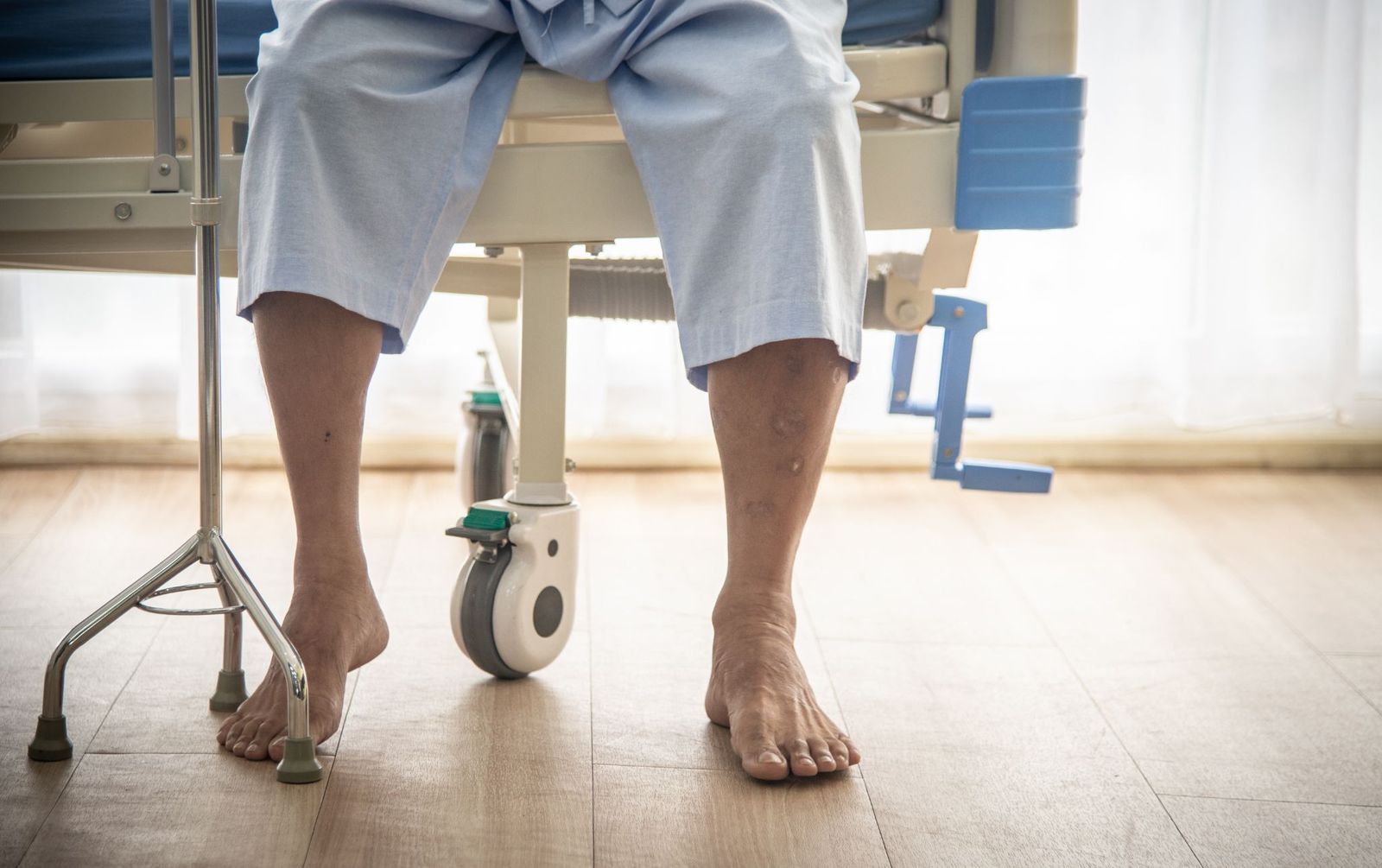
Newborns are always a reason to celebrate at the hospital. Parents usually rest happily next to their child as they receive congratulations from close relatives. However, the hospital is always prepared to handle extremely rare emergencies under "code pink."

If you hear a "Code Pink," it usually means a baby or young child is suspected of being abducted from the hospital. Within seconds, security officers respond, exits may be monitored or blocked, and staff begins following carefully rehearsed procedures. Although different hospitals sometimes use different color codes, Code Pink has become widely recognized across North America as one of the most serious alerts a hospital can issue.

5

Walkie-talkie

Image: Arunporn Thanapotivirat

If you’ve ever spent a few days in the hospital, you’ve probably noticed that some patients are walking up and down the halls, while others need help just getting out of bed. When a nurse refers to someone as a "walkie-talkie," it’s actually good news.

This informal expression refers to patients who can walk on their own, use the bathroom without assistance, and handle most basic tasks independently. It’s not an official medical term, of course, but it’s commonly used among healthcare workers because it quickly tells the next shift that the patient requires less hands-on care than many others.

6

Total

Image: sebra

As nurses change shifts, you’ll often hear them give a quick report about each patient. One person may only need medication, while another is described as a "total."

The term is short for a patient who requires total care. They may need help eating, bathing, getting dressed, turning in bed, or moving from one place to another. Although the expression sounds impersonal, it’s simply a practical way for caregivers to communicate how much assistance someone needs.

7

Frequent flyer

Image: Studio Romantic

Most people hear "frequent flyer" and think of an airline reward program. And that’s correct, but in an emergency room, the phrase has a very different meaning.

A frequent flyer is an informal nickname for patients who repeatedly return to the hospital, often due to chronic illness, recurring medical conditions, or other ongoing health issues. Behind the light-hearted nickname is often a difficult reality. Many of these patients are simply dealing with medical problems that require regular emergency care, and the expression is just a way to make the experience a bit lighter among the familiar faces of doctors and nurses.

8

WOW

Image: Studio Romantic

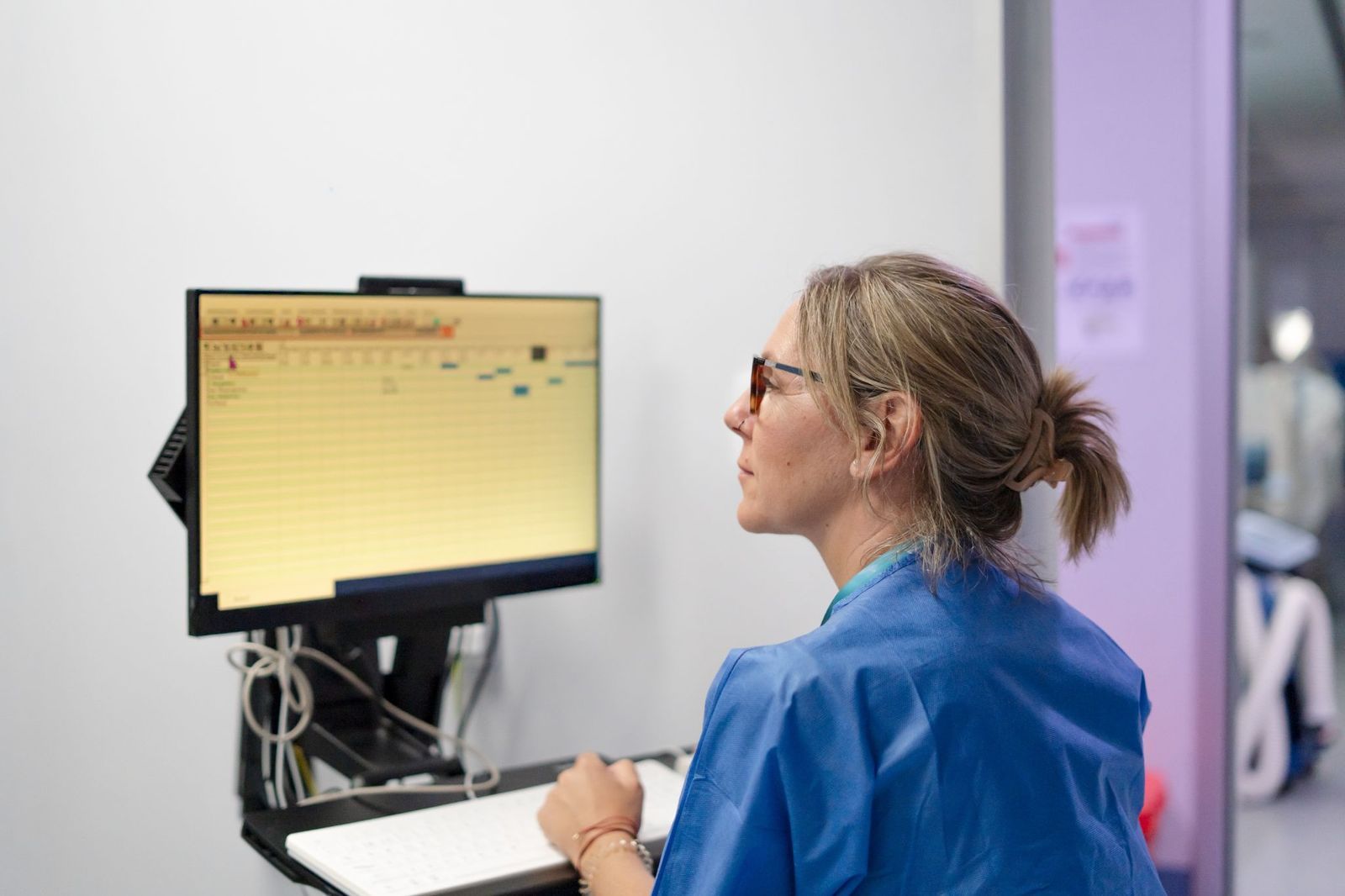
Not all codes are for patients. The next time you’re in a hospital, look closely at what the nurse is pushing from room to room. It may look like a small rolling desk with a computer on top. Staff often call it a "WOW," short for "workstation on wheels."

As hospitals switched from paper charts to electronic medical records, these mobile computers became essential. Nurses use them to review test results, scan medications, update patient charts, and check doctors’ orders without leaving the bedside. The name sounds funny, but the technology helps caregivers spend more time with patients instead of walking back and forth to a nursing station.

9

Sharp container

Image: NMK-Studio

After getting a shot or having blood drawn, most patients never think about where the used needle ends up. It certainly doesn't go into an ordinary trash can.

Hospitals place needles, scalpels, and other sharp medical instruments into special containers designed to prevent accidental injuries. These sturdy, puncture-resistant boxes are sealed when full and safely disposed of in accordance with strict health regulations. This not only protects nurses, but it also protects cleaning crews, waste handlers, and even the public from dangerous needle sticks. It’s one of the most important safety measures in every hospital, even though most patients never notice it.

10

B-52

Image: Photoroyalty

If you’ve ever watched a medical drama, you've probably seen a patient become so agitated that several staff members rush into the room. In situations like that, a doctor or nurse may ask for a "B-52." But the name has nothing to do with numbers themselves; it actually comes from a medicine.

B-52 is hospital slang for a fast-acting injection used to calm down patients who are severely combative or at risk of harming themselves or others. The nickname comes from a commonly used combination of medications that usually include diphenhydramine, haloperidol, and lorazepam. It’s strictly reserved for when other methods of calming the patient haven’t worked.

Looking for an extra scoop of literary fun?

Learn more with our Word of the day

iota

/aɪˈoʊdə/