BON APPETIT!

The Best Restaurants Worldwide. Here's the Top 10!


Published on May 26, 2024


Image: Peter Dawn

The world of fine dining is truly a fascinating one. Chefs get to experiment and innovate in something as primordial to the human race as food. As the popular saying goes: "Chefs are like musicians, but instead of music they play with food."

We have selected ten of the finest restaurants in the world that know how to transform food from a nutritional tool into a truly life-changing experience. And, if reading about these restaurants makes you a little hungry, you can always save this article in case you are in the neighborhood.

1

Noma - Copenhagen, Denmark

Image: Yohan Marion

Noma is an iconic restaurant in Copenhagen, Denmark, ranked as "Best Restaurant in the World" on four different occasions. The name comes from the abbreviation of two Danish words: Nordisk for Nordic and mad for food.

As the name indicates, this three-Michelin-star restaurant seeks to redefine traditional Nordic cuisine. Founders René Redzepi and Claus Meyer focus on foraging and using fresh, local ingredients for creating and reinventing new dishes.

2

Eleven Madison Park - New York City, USA

Image: Sebastian Coman Photography

Located in the Flatiron District of Manhattan, Eleven Madison Park offers thousands of New Yorkers a fine dining experience since 1998. This three-star restaurant offers a seasonal tasting menu inspired by New York’s local history and culture. The menu usually includes from eight to ten courses,

Since 2021, Eleven Madison Park only serves plant-based dishes. During the COVID pandemic, it became a commissary kitchen and made meals to help food-insecure New Yorkers.

3

Dinner - London, England

Image: Edward Howell

Celebrity English chef Heston Blumenthal created this restaurant in 2011 and within a year it had already received its first Michelin star. Located in London, Dinner’s menu is based on traditional British cuisine, thoroughly researched by food historians. Some recipes were even inspired by information found in the British Library.

The restaurant changes its courses every three months, but every menu contains historical dishes that range from the 14th to the 19th century. So, if you are looking to take a culinary step back in time, then Dinner is the place for you.

4

Alinea - Chicago, USA

Image: Romain Briaux

One of Chicago’s two restaurants with three Michelin stars, Alinea is definitively a culinary institution in the Windy City. Founded in 2005, its name comes from the pilcrow, a grammatical symbol that indicates a new paragraph. According to co-owner Nick Kokonas, the name was chosen to indicate the restaurant’s mission to "represent a new train of thought about food."

True to its name, Alinea’s menu consists of truly groundbreaking experiences. One of its most famous dishes is a chocolate dessert, mixed with several other ingredients, which is directly painted and scattered by a chef on the diner’s table.

5

Arzak - San Sebastian, Spain

Image: David B Townsend

Located in the heart of the Basque Country, Arzak is a Spanish restaurant founded by Juan Mari Arzak, considered one of the masters of "New Basque" cuisine. While it is considered one of the best restaurants in the world, Arzak is, above all, a family business: it is located in the house of the current owner’s grandparents, on which they originally ran a tavern. When Juan Mari’s parents took over, they turned the inn into a restaurant. By 1989, Arzak had been awarded three Michelin stars.

Arzak manages to perfectly combine tradition with innovation. Their dishes keep the regional flavor of Basque cuisine, using ingredients like local monkfish or spider crab, while still featuring a fresh and creative take on their presentation.

6

Central - Lima, Peru

Image: Jay Wennington

It probably goes without saying that Peruvian cuisine is world-famous: it effortlessly combines the traditions of different immigrant cultures, like European, Asian, and African, with local Peruvian ingredients and customs. The result is a fantastic gastronomic experience that attracts hundreds of culinary tours every year. One of the most visited stops on these trips is Central, an iconic restaurant located in the Barranco district, in Lima.

Virgilio Martínez Véliz, Peruvian chef and owner of Central, uses it as both his flagship restaurant and workshop for creating new "Contemporary Peruvian" dishes. Central was named "World’s Best Restaurant" in 2023.

7

Den - Tokyo, Japan

Image: Giovanna Gomes

A number of excellent Japanese restaurants could be included in this article. Not for nothing is Japan one of the countries with the most three Michelin stars restaurants. However, we have chosen Den, chef Zaiyu Hasegawa’s flagship location in Tokyo, as a must-visit restaurant in the "Land of the Rising Sun".

Den is unlike any other Japanese restaurant: it features contemporary, innovative dishes that mix traditional Japanese recipes with modern and original styles. Hasegawa is a unique chef who goes out of his way to make eating in Den both a groundbreaking and welcoming experience.

8

Atelier Crenn - San Francisco

Image: Nick Karvounis

Located in the Cow Hollow neighborhood, on the outskirts of the Golden City, Atelier Crenn is a French restaurant opened by chef Dominique Crenn. It features a 12-course tasting menu, which heavily focuses on fish courses.

Crenn has stated that Atelier Crenn is an homage to her father. The menu is written as a poem, on which each line features a teaching of Dominique’s father, which she learned during her childhood on a French farm.

9

Mirazur - Menton, France

Image: Jay Wennington

Mirazur is a restaurant that understands that a fine dining experience doesn’t just involve excellent food: Sitting on the banks of the French Riviera, this restaurant offers its diners wonderful views of the Mediterranean Sea which pair up perfectly with expertly prepared French food.

Run by Argentine-Italian chef Mauro Colagreco, Mirazur dishes draw inspiration from nature. Many of the ingredients used are grown in the restaurant’s garden, on which aromatic herbs, flowers, and vegetables are grown.

10

Le Bernardin

Image: Louis Hansel

Just like Arzak, Le Bernardin takes the most pride in knowing that, almost forty years after its opening, it still is a family restaurant. Founded by siblings Gilbert and Maguy Le Coze, this French restaurant was first opened in Paris before relocating to Midtown Manhattan in 1986. The name comes from a folk song that the father of the Le Coze siblings sang to them as children.

Le Bernardin focuses mainly on French seafood and fish recipes, which combine traditional French cuisine with Asian influences. It received three Michelin stars in 2005, in the first year in which Michelin published a guide to New York City.


Expressions inspired by the body

Terms that use body parts as symbols, handpicked for you


Published on May 26, 2024


Image: Zeynep Sümer

It’s curious how often language uses parts of the body as metaphors for expressing complex or abstract ideas. Can you easily think of a synonym for a "knee-jerk reaction" or for a "brainstorm"? We are well acquainted with the mechanics of our body parts, but when did we decide on the meanings of "heartfelt" or "footnote"? Let’s explore the history of these everyday terms and decode the symbolism of our anatomy.

1

Footprint

Image: Pascal Müller

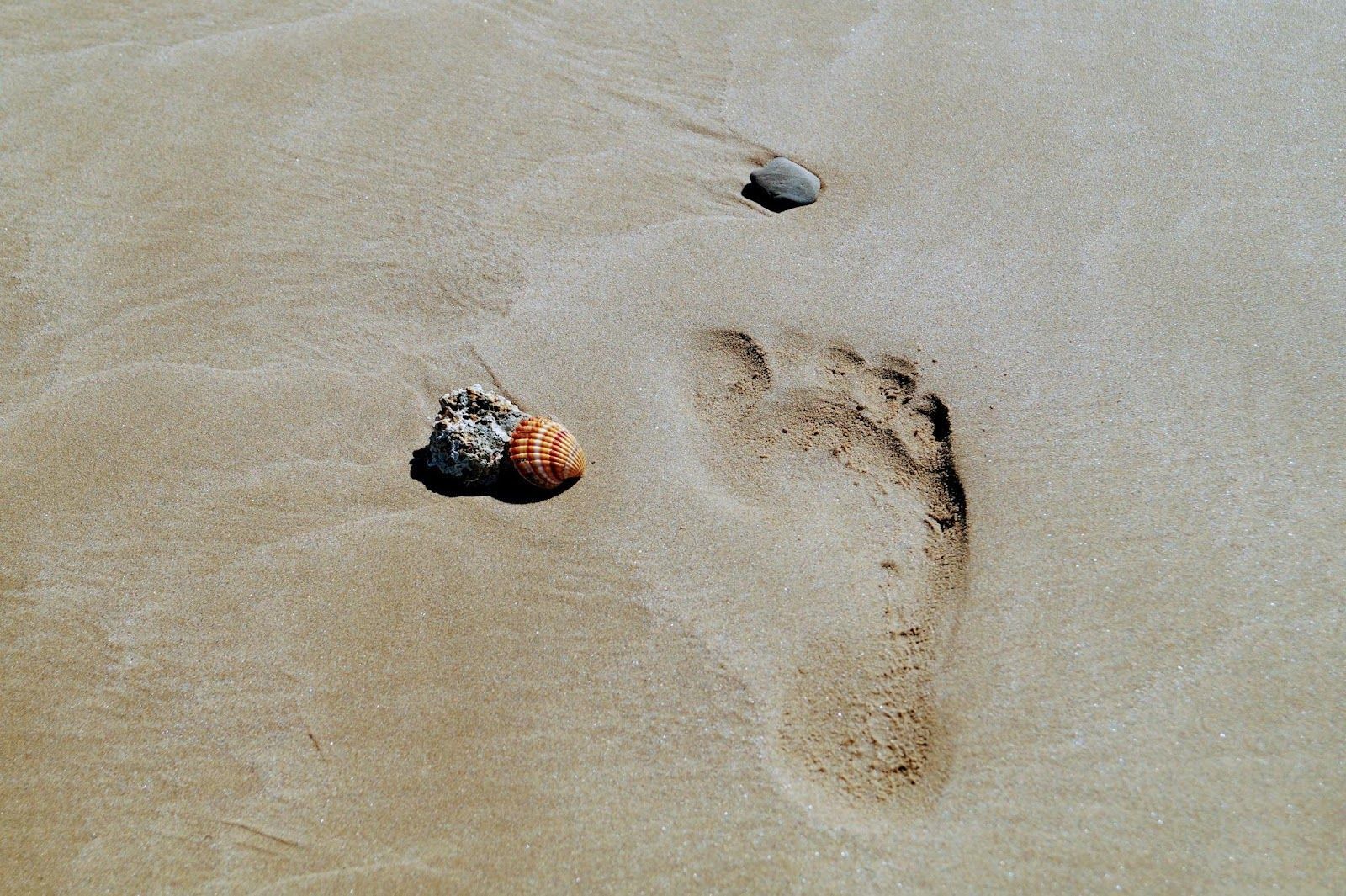
The marks our steps leave behind have been called "footprints," whether literally or figuratively, for at least a few centuries. The literal meaning first appears in records from the mid-16th century, notably in the work of English lexicographer Richard Huloet in 1552.

The idea that humans, as they move through life, leave behind a "digital footprint" or "carbon footprint" is far more recent, gaining popularity in the last 50 years. The term invites us to visualize the impact of one’s actions as something tangible—like a footprint in the sand. But why choose the feet, and not "handprints" or "fingerprints"? Perhaps because modern society often associates footprints with marks that are both significant and enduring, like those left by the first astronauts on the Moon.

2

Knee-jerk

Image: Ketut Subiyanto

When the tendon just below the kneecap is tapped, the leg’s reaction can surprise even us. This is known as the patellar reflex—an automatic, involuntary response. Over time, an impulsive response—such as abruptly changing the subject, leaving a room, or making a snarky remark—came to be described as a "knee-jerk reaction."

The first medical studies of the patellar reflex took place in the 19th century, and the "knee-jerk" metaphor gained popularity about a hundred years later. Ironically, while the neurological test indicates healthy nerve function, the term "knee-jerk" is often used pejoratively to describe reactions that are far from ideal.

3

Headstrong

Image: Mikhail Nilov

This word suggests that having a "strong head" is synonymous with being stubborn, rigid, obstinate, or even "hardheaded." If you are called bull-headed, pig-headed, or single-minded, you’re receiving a similar critique.

But what about the head made it a symbol of intransigence? These expressions draw on the metaphor of using one’s head as a battering ram—much like a bull charging forward. Unlike "pig-headed," however, headstrong is not always negative; it can also describe someone determined and persistent enough to achieve their goals.

4

Brainstorm

Image: Karolina Kaboompics

When it first appeared in the late 19th century, brainstorm had a very different meaning—it described a sudden, irrational burst of mental activity, or even temporary insanity. Then, in 1948, advertising leader Alex Faickney Osborn gave it a new life in his book Your Creative Power, introducing "brainstorming" as a group creativity technique.

In this new sense, the word stood for a flurry of free-flowing ideas. Osborn’s method encouraged team members to propose solutions without judgment or self-censorship—every idea was welcome. Today, brainstorm has broadened further, describing not only collaborative sessions but also any solo burst of creative thinking and problem-solving.

5

Handpick

Image: Abigail Madison

There was a time when agricultural products had to be not only selected but also plucked one by one, by hand—a symbol of careful, thoughtful selection. That patient craftsmanship gave rise to the word handpick as early as the 1780s.

The adjective handpicked and the figurative use of the verb developed later, in a more modern context. Today, we use handpicked to describe any curated selection—from a guest list to an eclectic arrangement of furniture—even if no actual hands were involved in the choosing.

6

Heartfelt

Image: Engin Akyurt

In ancient times, the heart was believed to be the source of emotion, thought, and love. Even after medicine revealed this to be inaccurate, the idea had already taken deep root in human culture.

The word heartfelt first appears in records around 1703, describing profoundly sincere emotions. Interestingly, the expression is almost exclusively used as an adjective. It never quite evolved into a verb or noun—you’d rarely hear of someone heartfeeling their apologies or congratulations.

7

Brainwash

Image: Karolina Kaboompics

In the latter half of the 20th century, brainwashing captured the public imagination through spy thrillers and dystopian works such as George Orwell’s 1984 (1949) and films like The Manchurian Candidate (1962) or A Clockwork Orange (1972). The image was chilling yet vivid—a mind scrubbed clean of its beliefs, ready to be rewritten.

The term’s real-world origins are far from fictional. Journalist Edward Hunter is credited with popularizing brainwash in his reports on the Korean War, describing how U.S. soldiers captured by Chinese forces were allegedly subjected to intense psychological reconditioning. The expression is a direct translation of the Chinese phrase xǐnăo (洗脑), meaning "to wash the brain."

8

Footnote

Image: Karolina Kaboompics

Marginal annotations have existed for as long as texts themselves. Even handwritten manuscripts bore commentaries in their margins, left by readers, scholars, or dissenters. When such annotated works were transcribed, these remarks were often moved to the "foot" of the page—the very bottom of the text.

The practice proved just as useful after the invention of the printing press. Footnotes allowed authors and editors to add material even after the main body had been set in type. Over time, that space at the bottom became a strategic place for citations, clarifications, or tangential observations. Many languages, including Spanish and German, share with English this same metaphor: the extra note at the foot of the page is a footnote.

9

Heartthrob

Image: Shihab Nymur

How did a beat of the heart come to mean an attractive person? Though heartbeat and heartthrob don’t seem closely related, heartthrob first appeared in the early 19th century, initially describing very strong emotions rather than the literal function of the organ.

By the 1900s, however, it evolved to describe someone who inspired those intense feelings in others. It wasn’t long before the term was applied to glamorous actors during Hollywood’s rise, cementing its meaning as charismatic men who made audiences swoon. Over time, heartthrob has continued to evolve, and today it commonly refers to people of any gender, celebrity status, or occupation.

10

Backbone

Image: Nastya Mind

The backbone has a fundamental function: to carry the weight of our body, enable movement, and keep us upright. The term has been known since at least the 15th century to refer to the literal spinal column—the series of vertebrae. But its figurative use came later.

By the 18th century, backbone had transformed into a symbol of inner strength, willpower, and even leadership or protection within a group. A resilient person might be said to have "grown a backbone," and a dependable worker is often called the "backbone of the team."

Looking for an extra scoop of literary fun?

Learn more with our Word of the day

debug

/ˌdiˈbəɡ/