WORDS AHOY!

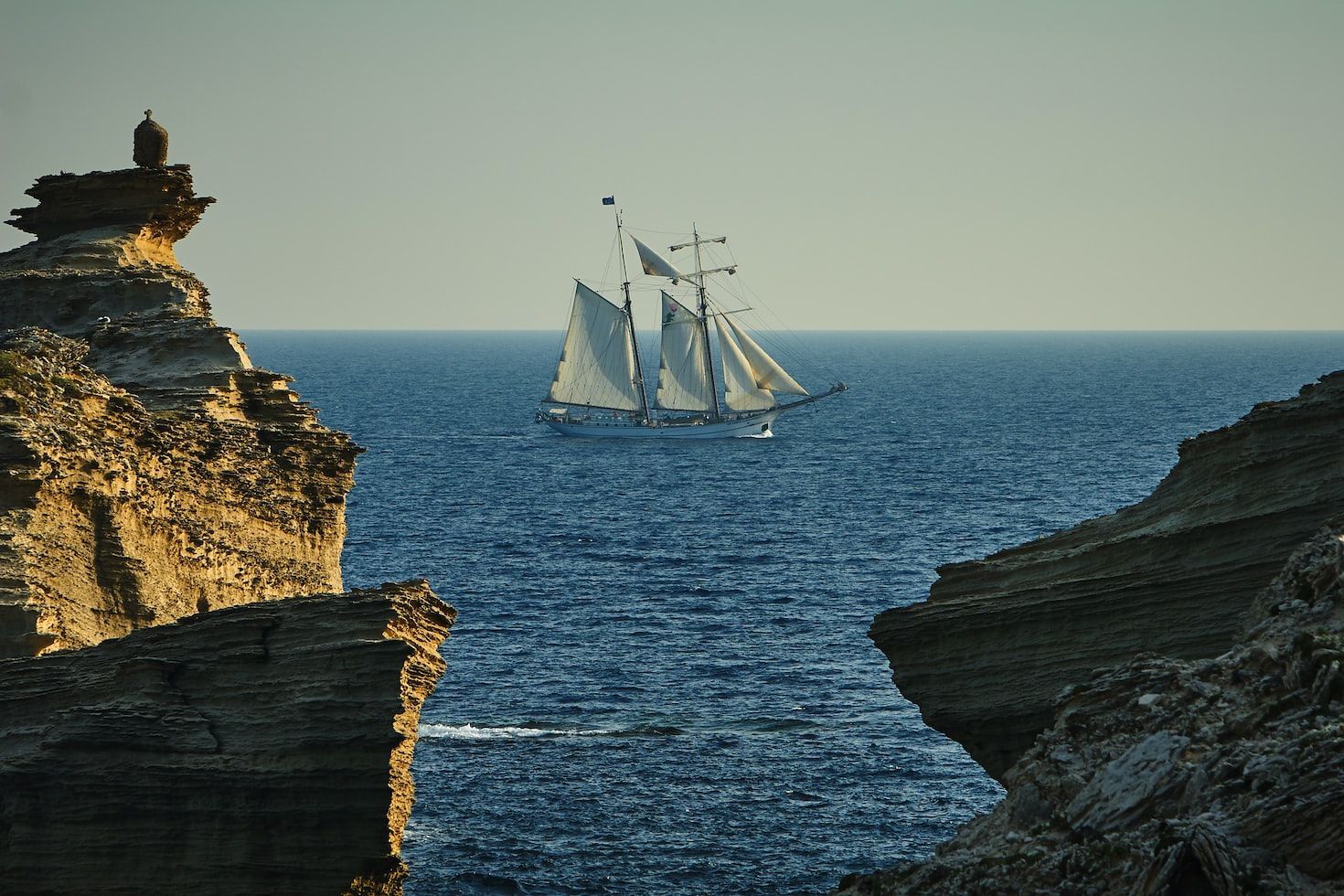
Sail away with these 10 nautical terms!


Published on February 8, 2024


Image: Crissy Jarvis

English is a true seafaring language, forged in the journeys of merchants and navies across the world’s seas. Contact with different cultures and languages has left an indelible mark on the language, and also, unsurprisingly, many nautical terms have seamlessly woven themselves into our vocabulary.

Let's dive deep into the origins of many common idioms and words with maritime roots, and discover the captivating stories behind these linguistic tides.

1

Long shot

Image: Hilthart Pedersen

From sea battles to gambling tables, the term "long shot" has sailed through time with its core meaning unaltered. Dating back to the age of naval warfare, it referred to an improbable cannon shot from a considerable distance. Taking into account the inherent inaccuracy of early cannons, and the difficulties of aiming at sea, hitting your target in such conditions was considered more a result of luck than skill. Today, we still use it when the odds seem distant and success is a gamble.

2

Flotsam and jetsam

Image: Robert Linder

Now mainly used together to refer to useless and discarded objects, these two terms describe slightly different things. Flotsam refers to floating objects that were accidentally lost at sea, or debris from a shipwreck that floats, while jetsam is deliberately thrown overboard. Interestingly, these words are still part of the legal lingo of maritime law.

3

Feeling blue

Image: Yuda Feby

Ever felt slightly blue on a cloudy day? Well, you can thank sailors for that, too! While experiencing melancholy or feeling homesick during prolonged journeys was a common occurrence among seafarers, it turns out that the word initially referred to the blue flags that a crew would fly after the death of a captain or officer at sea. Eventually, the color became strongly associated with feelings of sadness and grief.

4

Taken aback

Image: Craig Cameron

When the wind unexpectedly shifts and blows the sails flat or against their masts, it is said that the ship is "taken aback." The term originated around the year 1200, derived from the Old English phrase "on bæc," meaning "at or on the back." In everyday language, it refers to being surprised or caught off guard.

5

Showing one’s true colors

Image: Annie Spratt

Sailors once proudly displayed their ship's flags to indicate their allegiance. However, some would deceptively fly a false flag (another phrase that became part of our modern vocabulary) until they were close enough to attack. It was generally accepted, even among pirates, that a ship should not fire without showing her true colors. Today, "showing one's true colors" means revealing one's real intentions. The phrase "to pass with flying colors" has a similar origin, as ships would hoist their regimental flags after winning a battle.

6

Aloof

Image: Vidar Nordli-Mathisen

When a ship keeps a safe distance from the shore to avoid underwater dangers, it's said to be "loof" or windward. It’s opposite would be "alee." The sailing technique of keeping aloof by steering away from the shore eventually influenced other uses of the word, regarding someone keeping physical or emotional distance from others.

7

By and large

Image: orbtal media

This expression combines "by the wind" and "large," two nautical terms that refer to different sailing directions. To sail "by the wind" means sailing into the wind, or as close to the wind as possible, while sailing "large" means to sail in the opposite direction of the wind, or as far from it as possible. Eventually, the combined terms evolved to mean "on the whole", or "considering all factors."

8

In the doldrums

Image: Kevin Keith

Sailing through the equatorial regions of the globe, where sometimes there is little to no wind, became known as being "in the doldrums." Sail-powered ships would often become stuck in this region for weeks at a time until a sufficiently strong current of air could take them out of the dangerously quiet waters. Now, the phrase symbolizes a period of depressed inactivity or general stagnation.

9

Knowing the ropes

Image: Robert Zunikoff

Sailing novices of yore had to learn the numerous ropes and rigging of ships to become able crew members. Learning to identify the many different types of ropes, knots, and sails aboard a ship was a complex task that required time and practice, but it was a crucial learning process. Thus, knowing the ropes became synonymous with being knowledgeable and experienced.

10

Turn a blind eye

Image: Rock drum, CC BY-SA 4.0

This phrase has quite a humorous origin story. Reportedly, Admiral Horatio Nelson gave birth to this expression during the Battle of Copenhagen in 1801, where he literally turned a blind eye to orders by putting his telescope to his blind eye, ignoring a flagship’s signals to withdraw from the battlefield. Today, the phrase signifies willful ignorance, or pretending to not see something.


Timeless leaders

Discover 10 of the most outstanding military minds in history!


Published on February 8, 2024


Image: Filip Andrejevic

Few aspects of human history are as consistent as warfare. While armed conflicts are undoubtedly regrettable, it’s impossible to deny that they have played a central role in our culture since the dawn of civilization. In that sense, many exceptional military minds and strategists have left their mark on history—to the point that we still discuss their remarkable accomplishments centuries later. With that in mind, we have selected 10 of the most outstanding military minds humankind has ever produced, in an effort to pay homage to their strategic genius. Enjoy!

1

Napoleon Bonaparte

Image: Daniel Robert

Few military generals are as iconic as Napoleon Bonaparte. Can’t you instantly picture his emblematic military attire the moment you hear his name? Napoleon's accomplishments are as remarkable as his legacy—he rose to prominence during the French Revolution, led numerous military campaigns across Europe, and eventually ruled the French Empire as Emperor until 1815.

2

Julius Caesar

Image: Nemanja Peric

Just like Napoleon, a distinct image of the Roman leader Julius Caesar immediately comes to mind when his name is mentioned—a stoic, unwavering figure, his calculating mind crowned with iconic bay leaves. As a member of the political alliance known as the First Triumvirate, Caesar led Roman armies to victory in the Gallic Wars before clashing with his rival Pompey in a civil war, from which he emerged as the undisputed ruler of Rome until his assassination in 44 BC.

3

Alexander the Great

Image: Nikos Vlachos

Many historic leaders have borne the title "the Great," from the aforementioned Pompey to the Prussian monarch Frederick II. However, many historians argue that this distinction belongs above all to Alexander III of Macedon—better known as Alexander the Great. He ascended the throne of Macedon at just 20 years old, and by 30, he had built one of the largest empires in history, stretching from Greece to India.

4

Genghis Khan

Image: Patrick Schneider

Genghis Khan is arguably one of the most divisive figures in history. To some historians, he was a ruthless tyrant, while to modern Mongolians, he is revered as the founder of their nation. One thing that cannot be denied, however, is his military genius—he united the Mongol tribes into a single, unstoppable force that conquered vast regions of China and Central Asia.

5

Sun Tzu

Image: Kevin Jackson

Who can deny the military genius of the man who considered warfare an art form? Sun Tzu, a general and strategist during the Eastern Zhou period, is best known for writing the timeless military classic The Art of War. But don’t let the title mislead you—Sun Tzu’s insightful and groundbreaking teachings have transcended the battlefield, influencing fields such as business and sports.

6

George S. Patton

Image: mbtrama, CC BY 2.0

Let’s jump ahead a few hundred years to the 20th century and pay a well-deserved homage to the first American featured in this article. General George S. Patton is forever remembered for commanding the United States Army during World War II, including the Allied invasion of Germany and subsequent campaigns in France and Germany. Patton is not only celebrated for his military prowess but also for his colorful and resolute personality, which reassured millions of Americans during one of history’s darkest chapters.

7

Hannibal

Image: The Cleveland Museum of Art

Following the iconic thriller The Silence of the Lambs, the name Hannibal has taken on a somewhat eerie connotation. Which is a shame, considering it was also borne by a legendary Carthaginian general renowned for his military prowess. Hannibal famously led Carthage’s forces against the Roman Republic, including a daring crossing of the Alps with North African war elephants.

8

Horatio Nelson

Image: Gregory-S

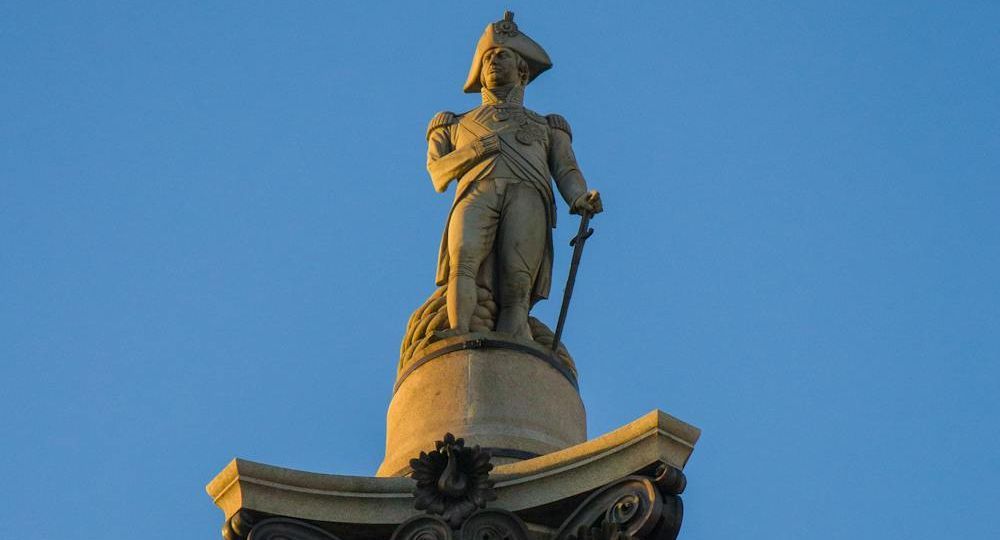
If you ever visit London’s iconic Trafalgar Square, you’ll likely come across a towering column topped by a statue of a stern-looking Royal Navy officer. This monument, known as Nelson’s Column, is a fitting tribute to Vice-Admiral Horatio Nelson, the hero of the Battle of Trafalgar. During this 1805 battle, the British Navy faced a formidable Spanish fleet. However, Nelson’s brilliant strategies secured victory—though he tragically lost his life from injuries sustained in combat.

9

Charles de Gaulle

Image: Umberto di Capua

Like George Patton, Charles de Gaulle is regarded as one of France’s greatest heroes. As a military officer, he led the Free French forces during World War II, playing a key role in restoring democracy to France. After the war, he chaired the provisional government of the French Republic until 1946. In 1958, he was elected President of France, a position he held until 1969.

10

William the Conqueror

Image: Maxwell Andrews

Much like Alexander the Great, many consider William I, the first Norman king of England, the ruler most deserving of the title William the Conqueror. As Duke of Normandy, William achieved what few had: invading England and claiming the throne after the death of Edward the Confessor. While he remains a divisive figure, his numerous statues in France and beyond stand as lasting tributes to his legacy.

Looking for an extra scoop of literary fun?

Learn more with our Word of the day

spontaneous

/spɑnˈteɪniəs/