WE HOPE YOU HAVE THE TIME

Which Are The Longest Words In The English Language?


Published on July 16, 2024


Image: Diana Polekhina

English can sometimes be a daunting language. Think about the challenges a non-native speaker must face in order to learn that "buy", "by", and "bye" are spelled differently but sound the same, or that the word "bear" can both mean "a large mammal" and "to support the weight of something". However, we believe that this difficulty is a large part of what makes the English language so beautiful, filled with unique words and spellings that completely amaze us.

We have compiled a list of ten long words that would both terrify a Spelling Bee contestant and make the mouth of a Scrabble player water. These words range from "a few letters too long" to "ridiculously lengthy". Enjoy!

1

Connecticutensian

Image: Rusty Watson

We’ll begin this list with one of the longest American demonyms we could find. While the official designations for the good people living in "The Constitution State" are "Connecticuter" and "Connecticutian", the unofficial demonym "Connecticutensian" can also be used.

Interestingly, none of these above-mentioned denominations is as regularly used as the colloquial nickname "nutmeggers". This comes with the unofficial nickname of Connecticut, known as "The Nutmeg State".

2

Pulchritudinous

Image: Caroline Veronez

Looking for new ways to tell your partner they are beautiful, but the words "pretty" or "handsome" seem to be overused? Don’t worry, we got you covered. Next time you are enjoying a candle-lit dinner, try looking into their eyes and saying, "Darling, you look absolutely pulchritudinous tonight."

Well, maybe this is not the most romantic of words, but it is still pretty interesting. It is derived from the word pulchritude, an out-of-style noun that means "beauty". In turn, this word comes from the Latin word pulcher, which translates to "beautiful".

3

Floccinaucinihilipilification

Image: Gary Chan

Try saying this three times fast. As quirky as this word sounds, its meaning is not as fun. "Floccinaucinihilipilification" is a word that describes the act of considering something completely worthless or unimportant.

However, don’t be too discouraged by this word’s meaning: chances are it was never used in casual conversation. In fact, it is mostly quoted as an example of a ridiculously long word, and not as an actual measure of importance.

4

Tergiversation

Image: Pawel Czerwinski

While the verb "tergiversate" isn’t exactly synonymous with lying, they are both cut from the same cloth. Its noun form, "tergiversation", describes the act of producing different statements, often twisting and turning facts to protect self-interest.

However, tergiversate has an accidental ring to it that lying usually doesn’t, since someone caught in tergiversation is found after stating contradictory facts that evidence his or her deceitful ways.

5

Antidisestablishmentarianism

Image: Akira Hojo

Just like "floccinaucinihilipilification", the word "antidisestablishmentarianism" is considered one of the longest non-scientific words in the English language. However, the main difference between them is that antidisestablishmentarianism was for a while present in everyday vocabulary, albeit in 19th-century England.

This word describes a movement that advocated for the Church of England to continue to receive government patronage. In fact, it was created as a response to another movement also blessed with an extremely lengthy name called "disestablishmentarianism", which called for the separation between church and state.

6

Uncopyrightable

Image: Umberto

While this word is definitively a mouthful, it is also rather straightforward. "Uncopyrightable" describes cultural products such as books, films, or photographs that can’t be claimed or protected under copyright laws.

The characteristics that might make something uncopyrightable are various: If the author is unknown, for instance, or if a certain item belongs to the public, like a legal code or constitution. Sometimes the matter of who is the author of a certain cultural item is disputed, and therefore no individual can truly claim ownership, so the work is deemed uncopyrightable.

7

Incomprehensibleness

Image: Sander Sammy

It is rather ironic that we try to explain the meaning of such a bewildering word as "incomprehensibleness" when it literally defines a state in which something is particularly or downright impossible to understand.

While its synonym "incomprehensibility" is far more regularly used, we must take our hats to "incomprehensibleness", a noun that took a word with an already difficult spelling and added a few extra letters just for the sake of being extra confusing.

8

Consanguineous

Image: Liv Bruce

Just like with "Pulchritudinous", we believe there are warmer ways to refer to your family, but let’s explore this word on the off chance you want to show your affection at the next Thanksgiving in a more formal, slightly offputting way.

"Consanguineous" is an adjective for people related by blood and, while it is mostly used in matters related to ancestry, it is perfectly suitable to describe your immediate family. The main root of this word comes from the Latin word sanguin, which means "blood".

9

Supercalifragilisticexpialidocious

Image: Andreas Praefcke

We know what you are thinking: This one feels a little bit like cheating. After all, this word was first said by the legendary Julie Andrews in the timeless Disney film "Mary Poppins", and it was written as an extremely long adjective, meant to sound silly for comedic effect.

However, you might be surprised to learn that this word has been included in several renowned dictionaries: Cambridge Dictionary defines "supercalifragilisticexpialidocious" as "extremely good". And while its use will forever be associated with our favorite British nanny, this wacky word has truly transcended its medium.

10

Hippopotomonstrosesquipedaliophobia

Image: Brett Jordan

We’ll end this article with a bit of an ironic twist. Besides being the longest word we could find, "hippopotomonstrosesquipedaliophobia" describes an irrational fear, as all words ending in "phobia" do. However, this noun holds the dubious distinction of describing an unreasonable fear to itself, since someone suffering from this phobia is terrified of long words.

To make matters worse, some people spell this word with an extra P ("hippopotomonstrosesquippedaliophobia"), which some believe is a humorous misspelling in order to make the word even longer.


Names that lie

Mountain chickens are frogs? 10 animals with misleading names


Published on July 16, 2024


Image: Jo Taylor

Some animals have commonly been given names that might lead you to believe false things about them. For example, as we all know, guinea pigs are not pigs, sea horses are not horses, and starfish are neither stars nor fish. So, how did these names come to be? While lookalike allegations may justify some, others are simply far-fetched. Is there any truth or reason behind these inaccurate nicknames—like "firefly"? Let’s explore 10 animal names that are, arguably, misnomers.

1

Mountain Chicken

Image: Yaroslav Savateikin

Let’s start with one of the most far-fetched names on this list. Mountain chickens aren’t birds at all—they’re large frogs. And they don’t live in mountains, either. These frogs are found mostly in the Caribbean, inhabiting lowland rainforests and swamps. A more accurate and realistic name for them is "giant ditch frogs," which refers to their large size and their tendency to dwell near water bodies.

So, how did they get this name? The story goes that locals found the frog’s meat similar in taste and texture to chicken. Yes, this now critically endangered species was once considered a delicacy in local cuisines.

2

Red panda

Image: Flickr

You would think that the red panda is just a smaller, red version of the giant panda. After all, they share cute faces, patches around their eyes, and similar snouts and ears. But you’d be wrong—red pandas are not bears.

Here’s the explanation: The word "panda" is believed to derive from the Nepali word ponya, which refers to animals with claws adapted for eating bamboo. This is the biggest trait red and giant pandas have in common: their heavily bamboo-based diets. Red pandas, sometimes nicknamed "firefoxes," belong to a mammal family of their own and are more closely related to skunks than to giant pandas.

3

Titmouse

Image: Matthew Goeckner

Titmouses aren’t rodents—did you know? Instead, they are songbirds known for their gray or bluish-gray feathers. One of the most common species is the tufted titmouse, and you’ll be pleased to know that the plural form is, indeed, "titmice."

The name "titmouse" comes from Old English, where tit referred to a small creature, and mase was a general term for a bird. Over time, mase became obsolete, and "titmase" was transformed into "titmouse" due to the similarity between the words. Arguably, there’s also some physical resemblance between the gray color and beady, round eyes of both titmice and mice.

4

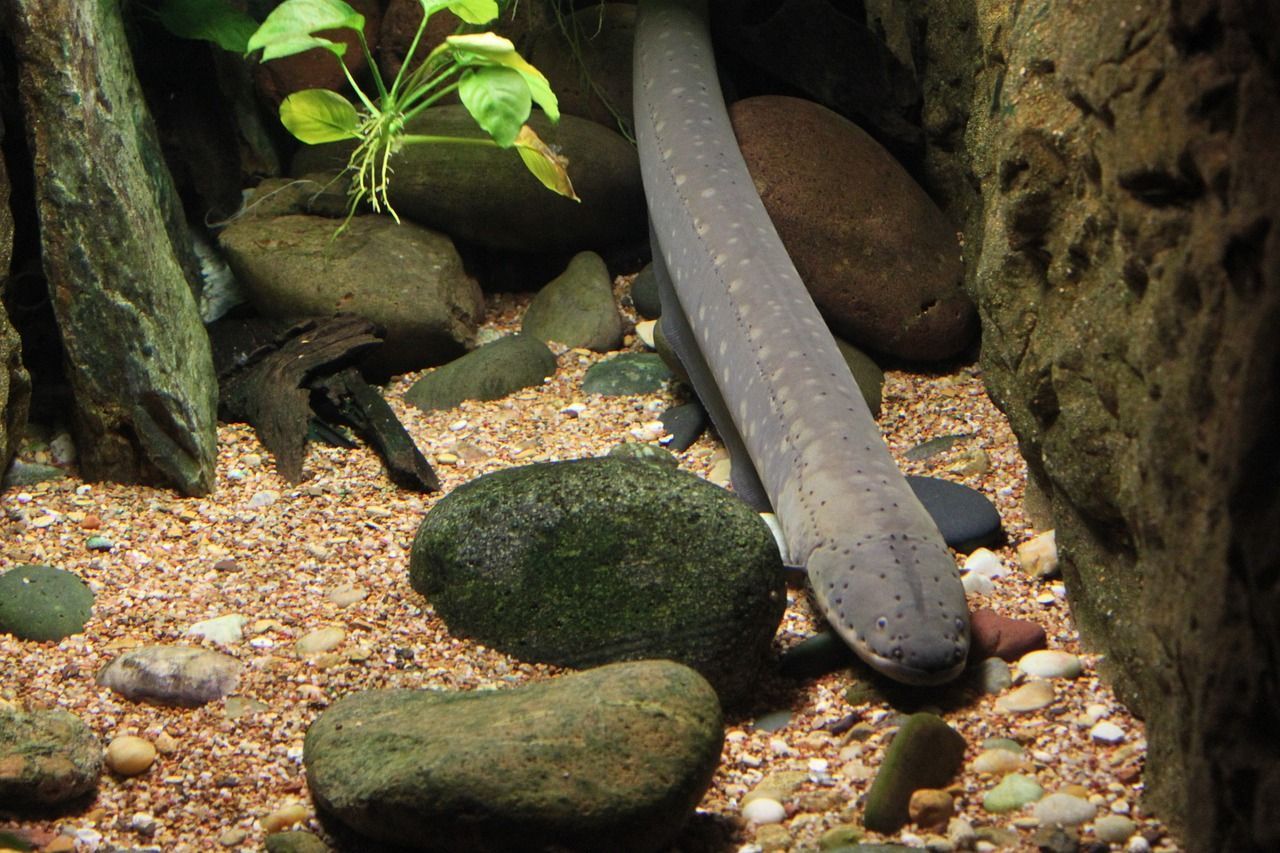
Electric eel

Image: k10legs

Yes, the name "electric eel" is misleading—but not for the reasons you might think. These aquatic animals are indeed capable of generating shocks of electricity, up to ​​860 volts, which they use to stun their prey or defend themselves. However, strictly speaking, they are not eels.

Unlike true eels, which belong to the family Anguillidae, electric eels are part of the knifefish family and are more closely related to catfish. Early European explorers misnamed them based on their elongated, eel-like bodies.

5

Seahorse

Image: Sergiu Iacob

Seahorses are fish, just like salmon or clownfish. Arguably, they look nothing like those species. Instead, for centuries, humans have noticed their resemblance to horses. Seahorses have a distinctive upright swimming posture, elongated heads and necks, and a caudal fin that even resembles a horse’s mane.

Their scientific name, Hippocampus, is borrowed from the Ancient Greek word hippókampos. Interestingly, the term didn’t originally refer to this animal but to a mythological marine creature. In Greek, hippos means "horse," and kampos means "sea monster."

6

Guinea pig

Image: Jack Catalano

Guinea pigs aren’t pigs—nor are they from Guinea, the West African country. Instead, they are rodents native to South America. By now their name has become synonymous with "experiment subject" because of how frequently they were used in scientific research.

There are a couple of theories behind their misleading name. The "pig" part likely comes from the squealing noises they make, which resemble those of piglets. As for "guinea," it might derive from the British coin of the same name, implying they were sold for its equivalent value. Another theory is that European sailors, associating distant Guinea with anything exotic, mistakenly applied the name to these South American rodents.

7

Koala bear

Image: Valeriia Miller

The koala is often called a "koala bear," but it’s not a bear at all. European settlers in Australia gave it this name because its round face and fluffy ears reminded them of bear cubs.

Koalas are, in fact, marsupials. Like kangaroos, they carry their young in pouches. The word koala comes from the Dharug language (an Aboriginal language of Australia) and is believed to mean "no water," referring to the koala's ability to survive on eucalyptus leaves with minimal water intake. Did you know? Eucalyptus leaves are low in nutrients and mildly toxic. As a result, koalas have a slow metabolism and sleep up to 20 hours a day.

8

Firefly

Image: Tony Phan

Fireflies don’t handle fire. They do, however, possess the ability to produce light, a phenomenon called bioluminescence. This light creates the illusion of tiny flames flying through the night. No wonder they have been associated with magic and fascination for centuries.

Despite their name, fireflies aren’t flies—they’re beetles. They produce light through a chemical reaction in their abdomens, which they use to attract mates or communicate. In fact, ​​different firefly species flash in distinct rhythms to help them identify each other.

9

Prairie Dogs

Image: Werner Hilversum

The first time you hear the term "prairie dogs," you might picture packs of dogs roaming freely across the prairies. In reality, these animals are rodents and belong to the ground squirrel family.

The name is believed to have been given by early European settlers due to their high-pitched sounds. Prairie dogs are capable of producing sophisticated and varied calls to communicate with one another, sometimes sounding like man’s best friend. The "prairie" part of their name comes from their habitat—vast grasslands and prairies across North America. These rodents are expert burrowers and typically live in small family groups called "coteries," where members groom and protect each other.

10

Ladybug

Image: Pixabay

It’s not only that ladybugs aren’t all female—they aren’t truly bugs, either. Instead, they are a type of beetle. These round and colorful insects have been widely associated with good luck and fortune for centuries. The reason for this has to do with the story behind their nickname.

The name "ladybug" originated in the Middle Ages, when farmers prayed to the Virgin Mary for help with pests in their crops. The beetles, which helped control aphid populations, were called "Our Lady's birds" or "Our Lady's beetles," later shortened to "ladybirds" or "ladybeetles." Over time, much to the frustration of entomologists, this evolved into the popular term "ladybugs."

Looking for an extra scoop of literary fun?

Learn more with our Word of the day

gladiatorial

/ˌɡlædiəˈtɔriəl/