MARVELS FROM THE PAST

10 Ancient Cities That You Can Still Visit Today


Published on February 26, 2024


Image: Toa Heftiba

Eventually, time makes ruins of all of humanity’s achievements, and not even the most magnificent cities are safe from decay. But not everything is lost! Luckily, many wonders from civilizations past are still standing proud. Ancient cities reinvent themselves through the ages, withstanding the test of time and connecting us to our most distant past.

Join us and explore 10 cities that are more than just historical relics, standing as living testaments to the ingenuity and resilience of humanity throughout the ages.

1

Athens, Greece

Image: Spencer Davis

Considered by many as the cradle of Western civilization, Athens has a legacy spanning over 7,000 years. From being the birthplace of democracy to the epicenter of art, philosophy, and literature in antiquity, Athens is one of the most enduring symbols of ancient Greek culture.

2

Damascus, Syria

Image: abd sarakbi

Located in the heart of the Middle East, Damascus was founded at some point during the 3rd millennium B.C., being among the oldest continuously inhabited cities in the world. Due to its strategic location and role as a key hub for trade and culture, the city kept its relevance until today. Despite facing numerous military conflicts in the recent decades, Damascus has preserved its ancient landmarks, including the Umayyad Mosque and the historic Old City.

3

Jericho, West Bank

Image: Snowscat

Another city that can boast being continuously inhabited since times immemorial, Jericho's origins trace back over 10,000 years. Situated west of the Jordan River, its fertile lands have supported human settlement since the dawn of agriculture. The ancient city's iconic walls and archaeological sites offer a glimpse into the dawn of civilization in the region.

4

Varanasi, India

Image: Shiv Prasad

Situated along the banks of the sacred Ganges River, the city of Varanasi dates back over 5,000 years. According to Hindu mythology, the city was founded by Shiva, one of the major deities of Hinduism, over 5,000 years ago. However, archaeologists now believe the city is closer to 3,000 years old.

5

Susa, Iran

Image: Blitz1980, CC BY-SA 3.0

Located in present-day Iran, Susa was one of the earliest cities in the world, dating back to 4300 B.C. Disputed among many empires along its complex history, Susa played a major role in shaping ancient Mesopotamian civilization. Today, the modern Iranian town of Shush is located on the site of the ancient city.

6

Byblos, Lebanon

Image: Nabih El Boustani

Also known as Jebeil, Byblos has a long history dating back over 7,000 years. Situated on the Mediterranean coast, it was a vital center of trade and Phoenician culture, exporting many precious goods to ancient Egypt and beyond. Notably, Byblos is also known as the birthplace of the Phoenician alphabet, the ancestor of all modern Western alphabets.

7

Plovdiv, Bulgaria

Image: Anton Atanasov

The second-largest city in Bulgaria, Plovdiv is one of the oldest cities in Europe, with a complex tapestry of Thracian, Greek, Roman, and Ottoman influences. Many archaeological sites within the city are well-preserved, such as a Roman amphitheater and the remains of its medieval fortress walls and towers.

8

Larnaca, Cyprus

Image: Datingjungle

One of the least-known ancient cities of the world, Larnaca can trace its roots back over 3,000 years. Once the site of the ancient city-kingdom of Kition in the 13th century B.C., it was also the birthplace of the Stoic philosopher Zeno. Although the island endured several devastating earthquakes throughout its history, current visitors can explore its many archaeological sites while enjoying the timeless beauty of the Mediterranean.

9

Luxor, Egypt

Image: CALIN STAN

Formerly known as Thebes, Luxor is sometimes referred to as the "world's greatest open-air museum," due to the amount of archaeological ruins and Egyptian constructions that stand within the modern city. With a history spanning almost 4,000 years, it saw dozens of kingdoms and empires rise and fall from its walls. While the Valley of the Kings is one of its most popular landmarks, the city has literally hundreds of historical sites worth visiting.

10

Fez, Morocco

Image: Parker Hilton

Founded in the 8th century during the Idrisid dynasty, an early Muslim kingdom, Fez is one of the oldest cities in Morocco, renowned for its well-preserved Islamic architecture and vibrant cultural heritage. The Medina of Fez, a designated World Heritage site, allows visitors to travel back in time as they explore a large urban area filled with beautiful mosques, ancient streets and restored traditional houses.

A national parade

Wave your flag high! National flags with unique elements


Published on February 26, 2024


Image: Vladislav Klapin

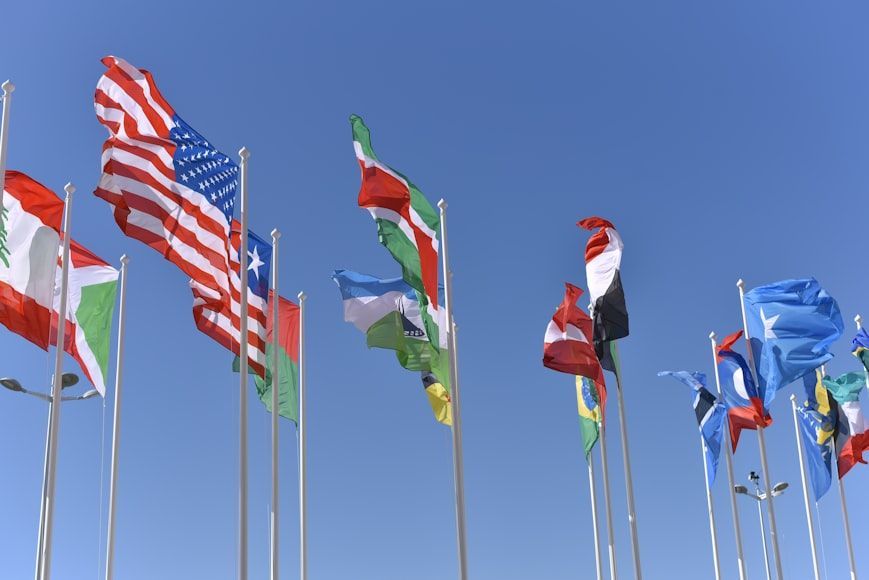
A country’s flag is a visual representation of an entire nation, and a symbol that unifies all those who belong to it. While most flags are easily recognizable, they often share common elements such as colors, designs, or meanings. Consider Poland and Indonesia, or Belgium and Germany.

Although flags from the same region or countries with a shared history may have similarities, some flags are so unique that they could never be mistaken for something else. Let’s have a look at some of them!

1

Nepal

Image: Arun Ghimire

This South Asian country, located between China and India, is known for being home to Mount Everest, much of the Himalayas, and as the birthplace of Buddhism. But Nepal is also known for another distinctive feature: its flag.

The Nepali flag shares its red, white, and blue colors with other Asian countries such as Thailand, Cambodia, and Laos, but its uniqueness comes from its shape, as Nepal is the only country in the world without a rectangular flag. Instead, it’s formed by two joined pennants (or triangular banners). A sun and a crescent moon symbolize the hope for the country’s longevity.

2

Mozambique

Image: jorono

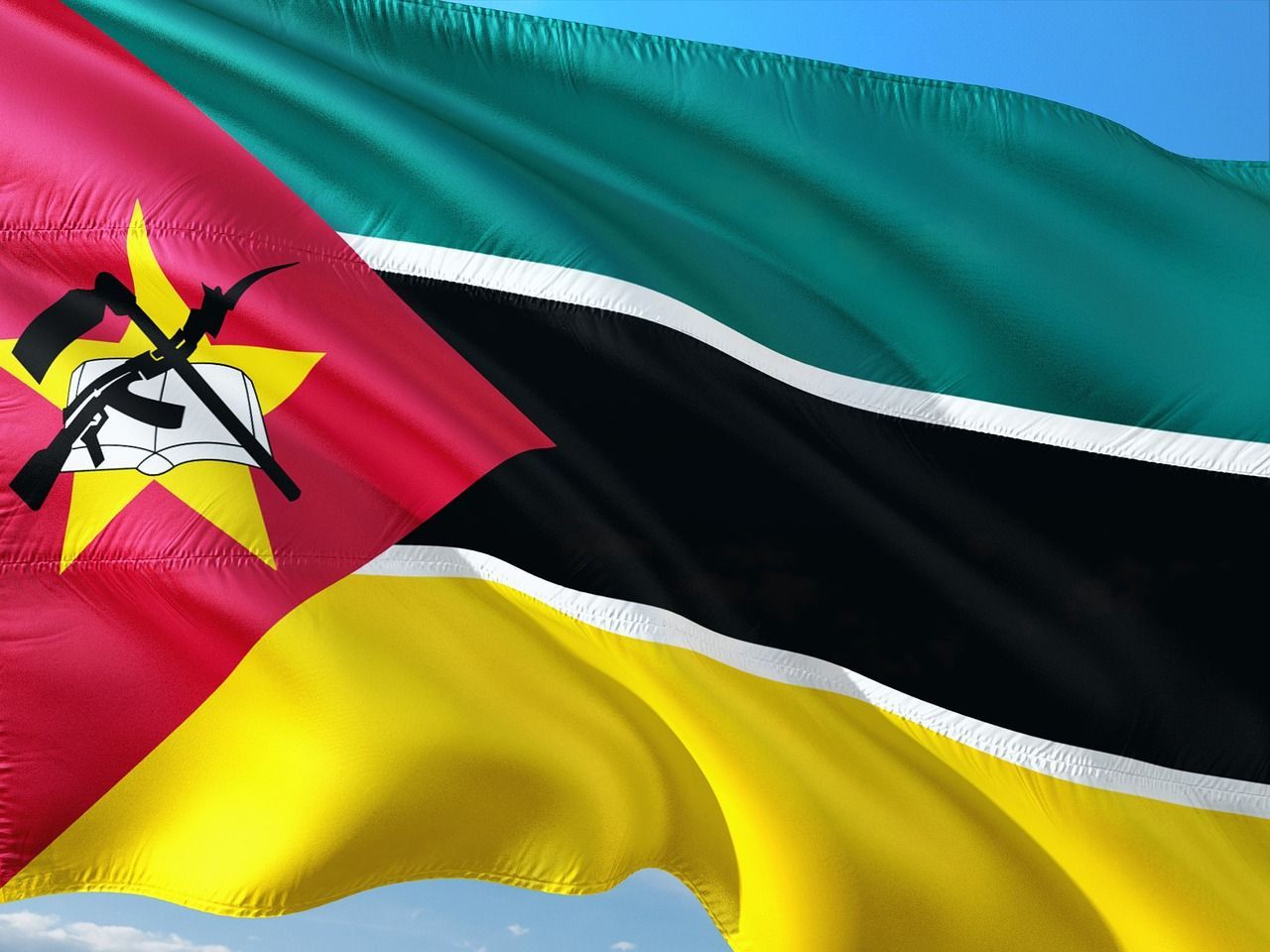
Mozambique’s flag features three horizontal stripes—green, black, and gold—separated by thin white lines. On the left side, it has a red triangle. Up until now, not so different from many other flags. However, the red triangle contains several symbols: a yellow five-pointed star, a book, and, crossing over them, a gun (specifically an AK-47) and a hoe.

Each of these symbols has a particular meaning: the star symbolizes the country’s solidarity with the world, the book represents education, the hoe, agriculture, and the gun, the nation’s defence. However, some political parties have pushed for the gun to be removed as a symbol.

3

Kiribati

Image: Kaufdex

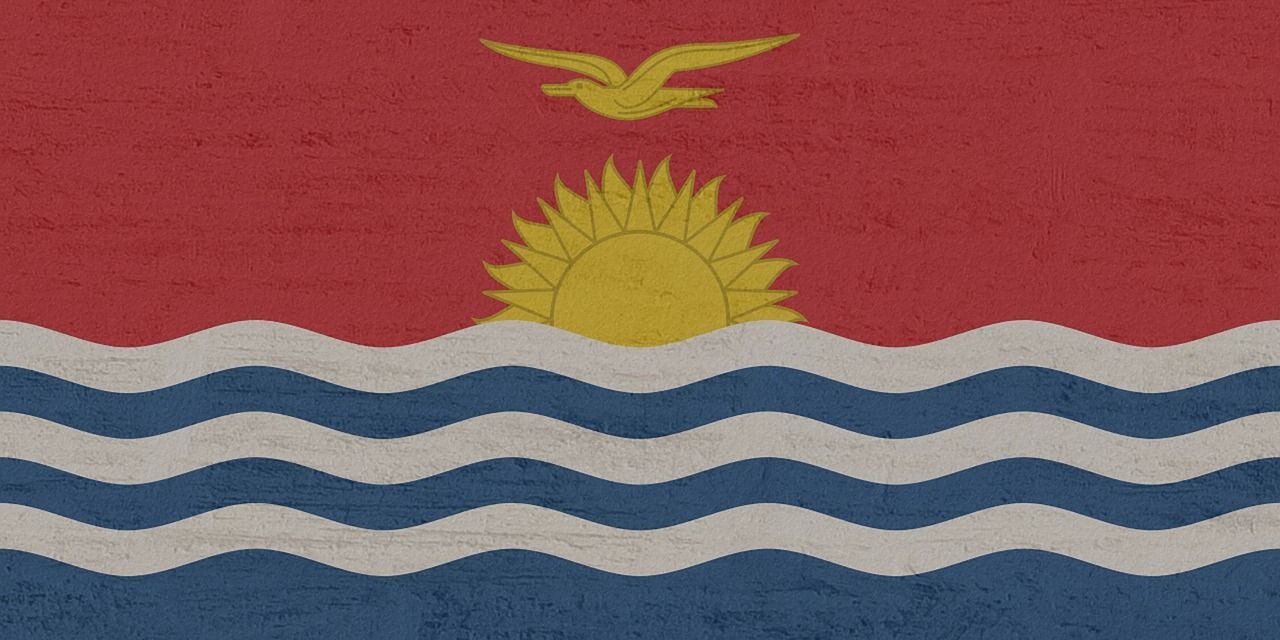
The Republic of Kiribati is a small island nation located in the Micronesia region. Composed of a series of atolls and one coral island, it lies where the equator meets the 180th meridian, placing it across the northern, southern, eastern, and western hemispheres.

Kiribati’s flag features several national symbols: the upper half is red, and it showcases a golden bird—a symbol of freedom and mastery of the sea—flying over a rising sun. The lower half is blue with three wavy white stripes, representing the Pacific Ocean and the country’s main archipelagos, while the 17 rays of the sun represent Kiribati’s 17 islands.

4

Wales

Image: balesstudio

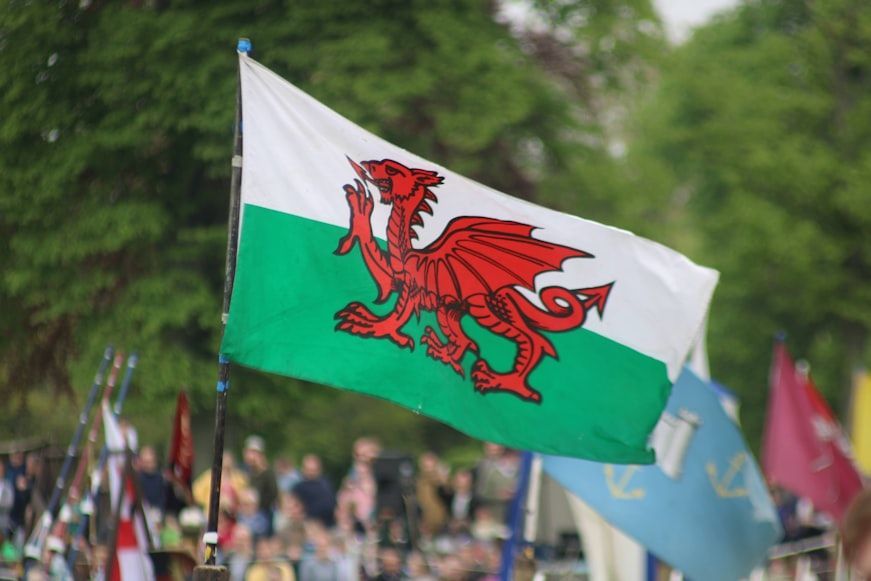
The flag of Wales stands out from other European flags because of its prominent dragon. It is also one of only three national flags to feature this mythical creature, the other two being Malta and Bhutan. The Y Ddraig Goch (red dragon) is depicted in a passant attitude—heraldic terminology for "striding with a raised paw"—over a green and white background, colors associated with the House of Tudor.

Where does the dragon come from? The Welsh have always used the dragon as a symbol for their leaders, and a red dragon defeating the enemies of Wales appears in many tales. The dragon is also linked to the Arthurian legend and the prophecy of King Arthur’s return to restore the island to the Celtic Britons.

5

Dominica

Image: jorono

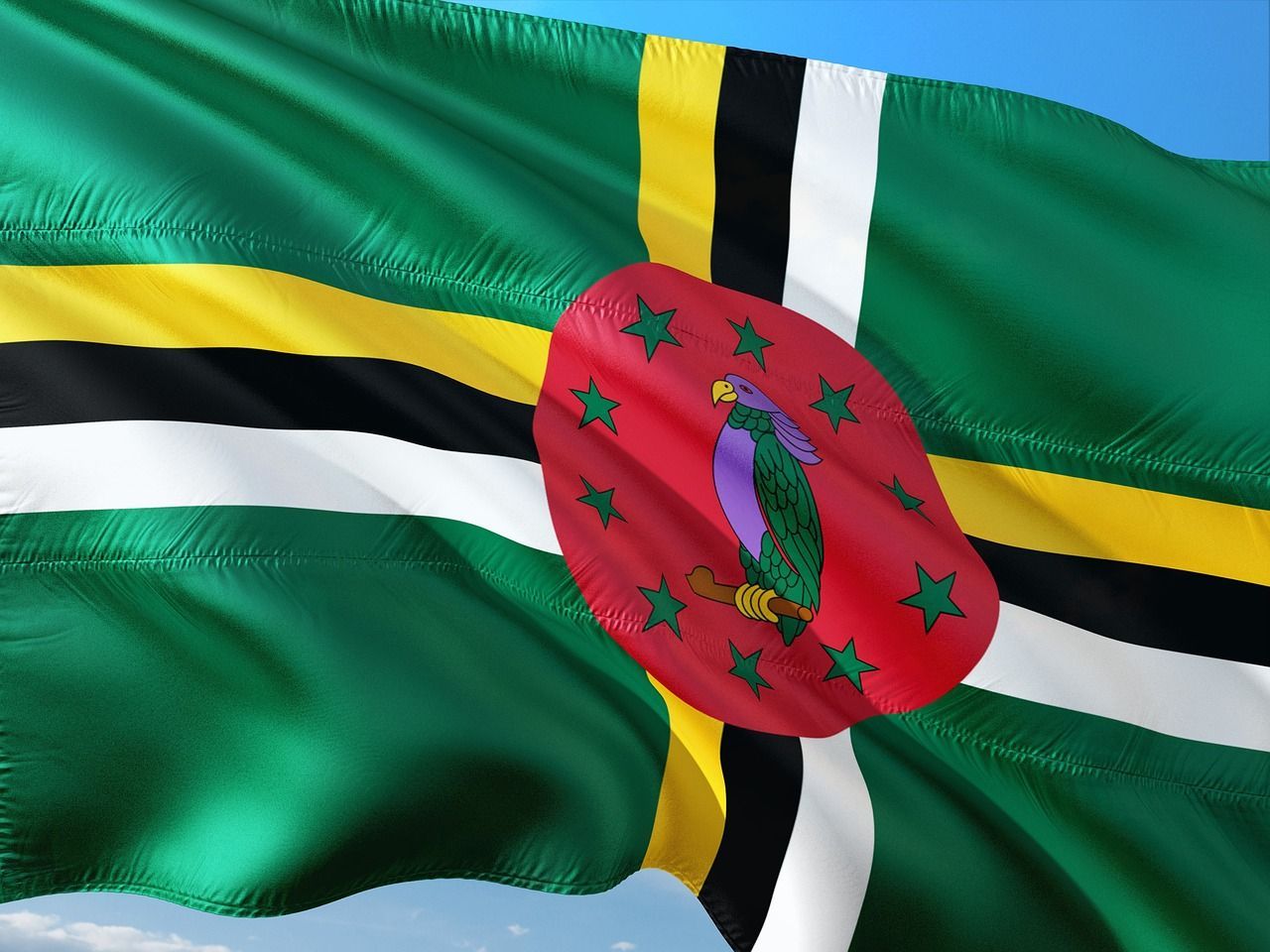
Purple is a color present in very few national flags (four, to be precise), and Dominica’s flag uses it in the most evident way. This Caribbean nation’s banner has a green field crossed by a vertical and a horizontal band, each featuring yellow, black, and white stripes.

At the center, a red circle displays a Sisserou parrot surrounded by ten green stars. The Sisserou parrot, Dominica’s national bird, has dark purple feathers on its chest and head, which are represented on the flag. This species is found only on the island and is considered critically endangered.

6

Guyana

Image: Adam Gethin

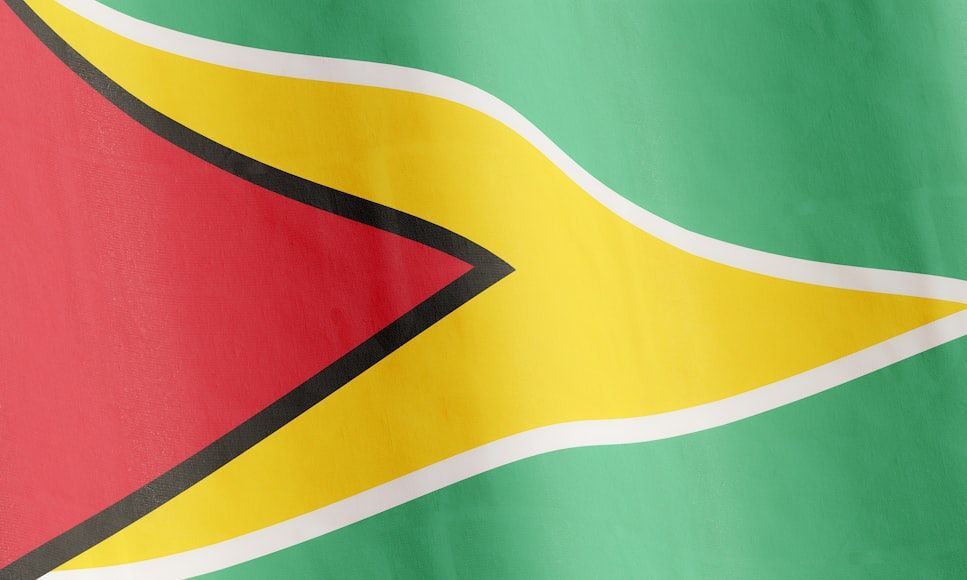
Known as the Golden Arrowhead, Guyana’s flag stands out from other South American banners for its use of triangular shapes—one at the hoist and one extending across the flag—an element more commonly seen in Caribbean and Central American flags (e.g., Cuba, Saint Lucia, Jamaica).

The colors of Guyana’s flag are deeply symbolic: red, gold, green, black, and white represent zeal, mineral wealth, agriculture, endurance, and the rivers that give the country its name, as Guyana means "land of many waters."

7

Bhutan

Image: jorono

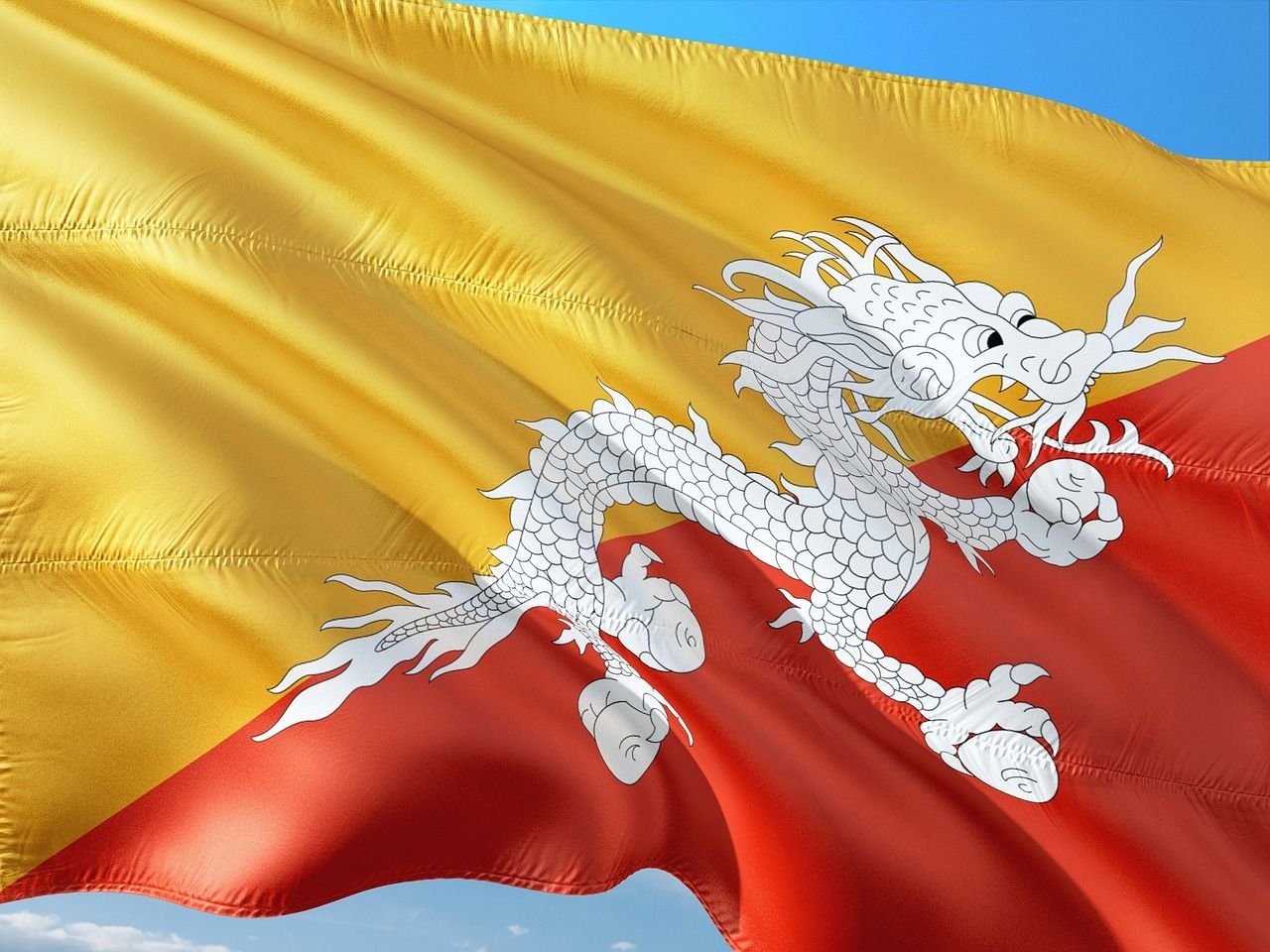
One of only three national flags featuring a dragon, Bhutan’s banner has a meaning closely tied to the country’s name. In the Dzongkha language, Bhutan is called Druk Yul, meaning "The Thunder Dragon Kingdom," a title also bestowed upon its monarch, the Dragon King.

Bhutan’s flag is divided diagonally into two fields, one yellow and one orange, symbolizing the civil authority of the king and the country's Buddhist heritage. Over the dividing line, the white dragon (a symbol of purity) stretches across both fields, emphasizing the equal importance of civil and religious matters. The dragon holds jewels that represent the nation’s wealth and security, and its snarling mouth signifies the defense of the country by its deities.

8

Eswatini and Kenya

Image: jorono

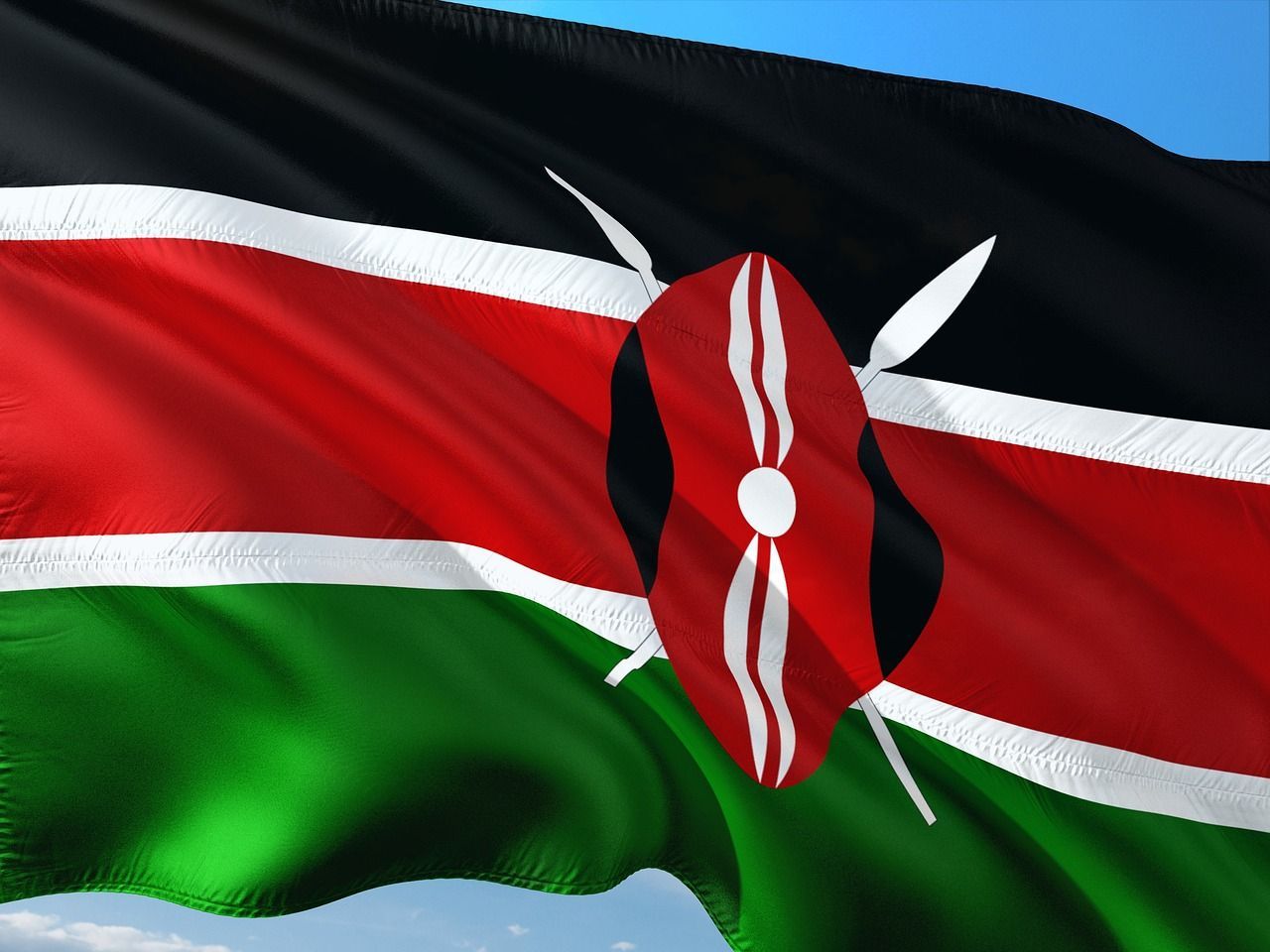
The Kingdom of Eswatini and the Republic of Kenya are two distinct nations, so they naturally have different national flags. However, they share one notable feature: both flags display a traditional shield at the center.

Eswatini’s flag has three blue and red bands, separated by yellow strips. In the center, two spears are covered by a sideways Nguni shield, traditionally made from ox skin and reinforced with a staff. On the other hand, Kenya’s flag is divided into three bands of black, red, and green, separated by white stripes. A Masai shield over two crossed spears at its center represents the defense of the country and its traditions.

9

Papua New Guinea

Image: Spencer Wungin

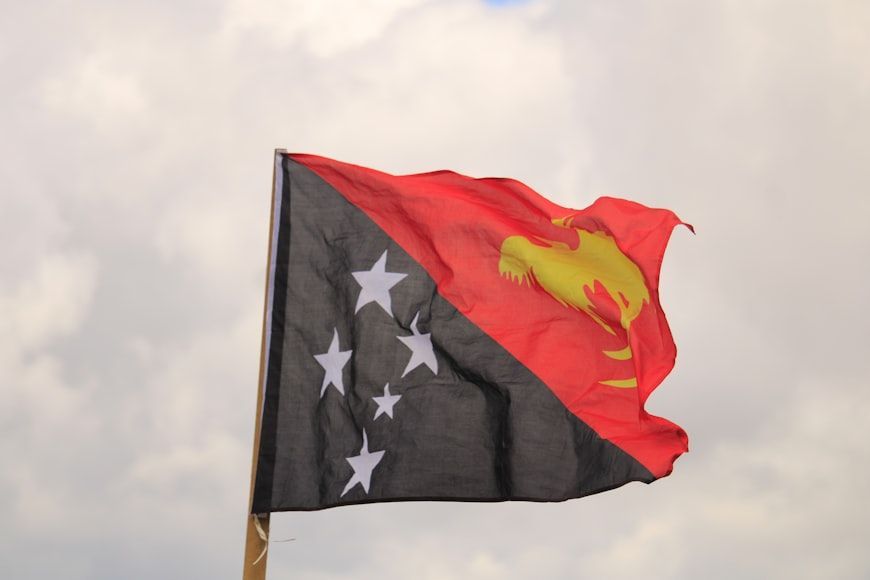
The flag of this Melanesian country contains several symbolic elements representing its people. It’s diagonally divided into red and black fields, two colors that Papua New Guinea tribes have used traditionally. On the lower black triangle, five white stars form the Southern Cross, one of the most important constellations in the Southern hemisphere.

The upper red triangle showcases the national bird, the Raggiana bird-of-paradise, in yellow. Fun fact: Papua New Guinea’s flag was designed through a national contest, and the winning entry was submitted by a 15-year-old girl.

10

Cyprus

Image: GregMontani

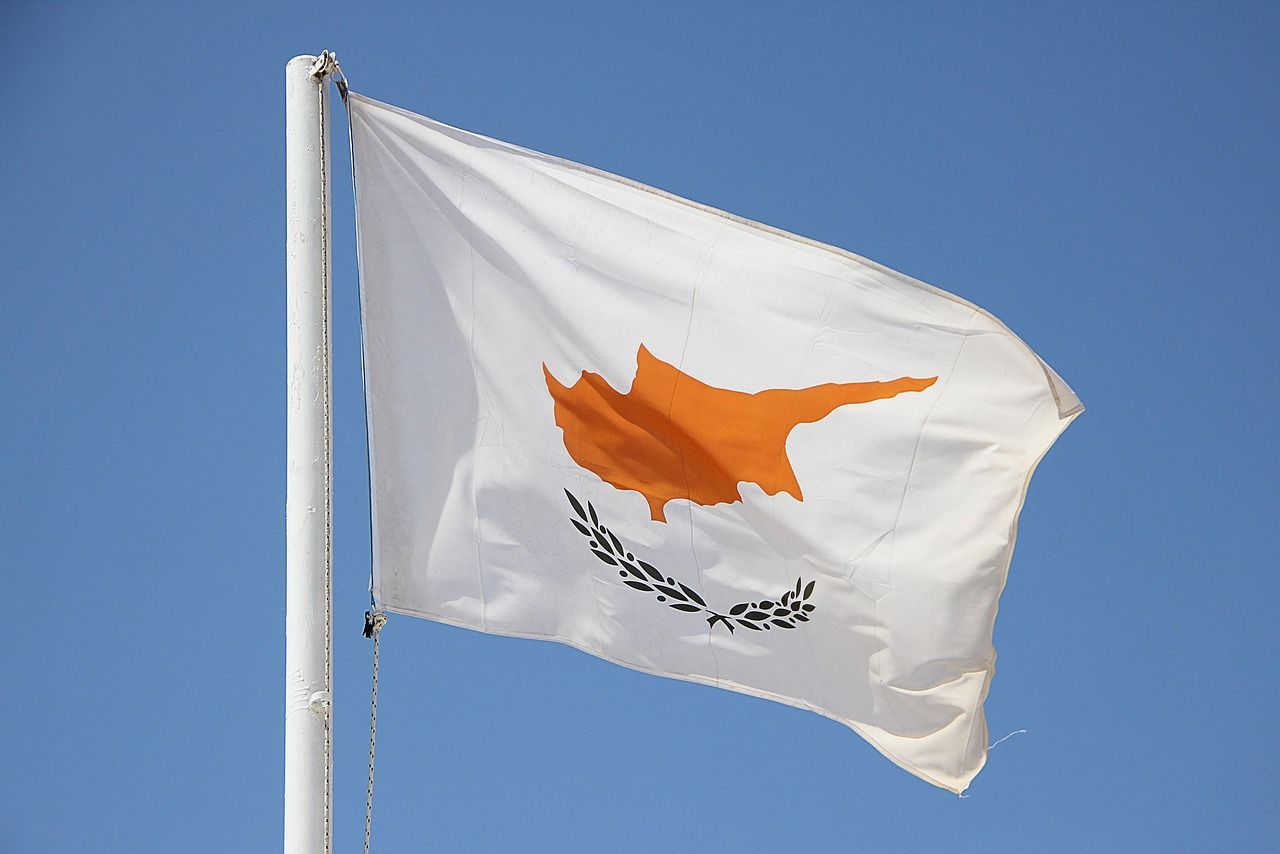
This island’s flag has a unique element: it features the shape of the country at its center. The only other national flag to do this is Kosovo’s flag, though Kosovo is not recognized as a sovereign state by all countries.

Intended to represent the harmony between Cypriots of Greek and Turkish descent, the flag’s creators intentionally avoided colors and symbols associated with either group, opting instead for a white background with the island’s silhouette in copper over two green olive branches.

Looking for an extra scoop of literary fun?

Learn more with our Word of the day

influential

/ˌɪnˌfluˈɛn(t)ʃ(ə)l/